Full moon calendar 2026: dates, names, and best viewing tips
When is the next full moon?
The full moon occurs when the Moon is directly opposite the Sun relative to Earth, fully illuminating the side we see. Full moons happen approximately every 29.5 days — roughly once per calendar month. Check the exact date of the next full moon on our moon phase calendar.
Each full moon rises near sunset and sets near sunrise, making it visible for the entire night. This is the only lunar phase that stays above the horizon from dusk to dawn.
Full moon dates in 2026
Here are all 12 full moons in 2026, along with their traditional names:
- January 3 — Wolf Moon (January 2026 moon phases)
- February 1 — Snow Moon (February 2026 moon phases)
- March 3 — Worm Moon (March 2026 moon phases)
- April 1 — Pink Moon (April 2026 moon phases)
- May 1 — Flower Moon (May 2026 moon phases)
- May 31 — Blue Moon (May 2026 moon phases)
- June 29 — Strawberry Moon (June 2026 moon phases)
- July 29 — Buck Moon (July 2026 moon phases)
- August 28 — Sturgeon Moon (August 2026 moon phases)
- September 26 — Harvest Moon (September 2026 moon phases)
- October 26 — Hunter's Moon (October 2026 moon phases)
- November 24 — Beaver Moon (November 2026 moon phases)
- December 24 — Cold Moon (December 2026 moon phases)
Note: 2026 has 13 full moons because May has two. The second full moon in a calendar month is popularly called a "Blue Moon" — hence the phrase "once in a blue moon."
How to photograph the full moon
Equipment. You don't need expensive gear. A camera with at least 200mm equivalent focal length will capture the Moon with visible surface detail. A 300mm-600mm telephoto brings out impressive crater detail. Even a good smartphone with a zoom lens can capture usable moonrise shots.
Settings. The Moon is brighter than most people expect. Start with ISO 100-200, f/8-f/11, and 1/125-1/250 second shutter speed. The "Looney 11 rule" is a quick starting point: set aperture to f/11, shutter speed to 1/ISO (so at ISO 100, use 1/100 second).
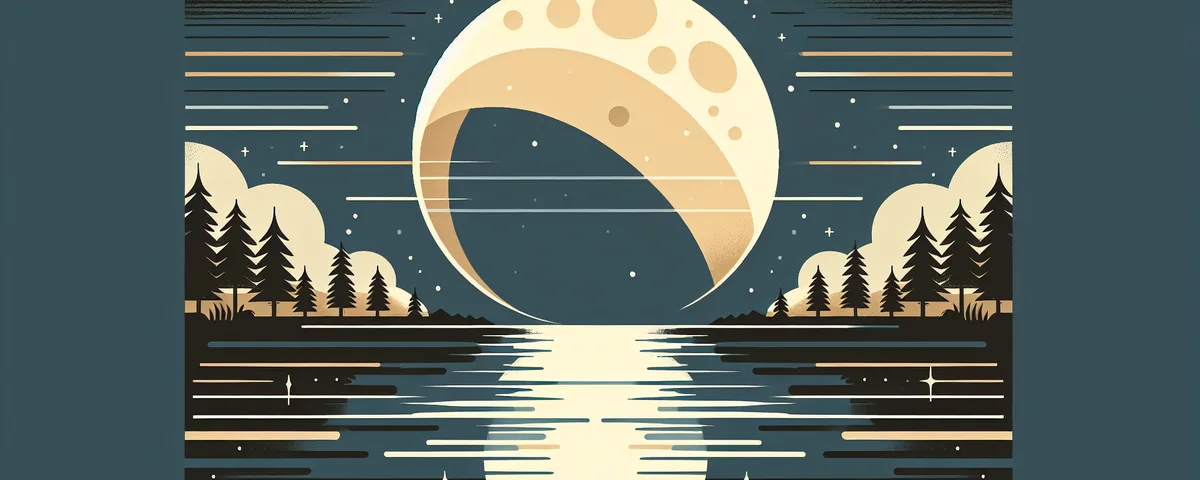
Timing. The most dramatic moon photographs are taken during moonrise, when the Moon sits on the horizon alongside foreground elements — city skylines, mountains, trees, or people. Check the sunrise and sunset times for your city — moonrise on a full moon night occurs roughly at sunset.
The Moon illusion. The Moon appears larger near the horizon due to a psychological effect. This is the perfect moment for dramatic photographs. Use a long telephoto lens from a distance, with a foreground subject silhouetted against the rising Moon.
Planning tools. Combine our moon phase calendar with sunrise and sunset times to plan the perfect shoot. Know when the full Moon rises, check golden hour timing, and arrive 30 minutes early to set up.
Best conditions for moon viewing
Clear skies. Cloud cover is the biggest obstacle. Check weather forecasts for your area before planning a moongazing session.
Low light pollution. Full moons are bright enough to see from cities, but suburban or rural locations reveal dramatically more detail, atmospheric color, and the subtle glow of Earthshine.
Horizon visibility. For moonrise and moonset viewing, choose a location with a clear, flat horizon — a beach, hilltop, or open field. Buildings and trees can block the most dramatic moments when the Moon is near the horizon.
Atmospheric conditions. On humid evenings, the Moon can appear orange or red near the horizon as its light passes through more atmosphere. This effect is strongest in summer and produces the most colorful moonrises.
Binoculars. A pair of 7x50 or 10x50 binoculars transforms casual moon viewing into a rewarding experience. Craters along the terminator (the shadow line between light and dark) pop with three-dimensional detail. You don't need a telescope for impressive views.
Full moon effects on nature
The full moon has measurable effects on the natural world:
Tides. Full and new moons produce spring tides — the highest high tides and lowest low tides of the month. The gravitational alignment of Sun, Earth, and Moon amplifies tidal forces. This affects coastal activities, fishing, and marine ecosystems.
Animal behavior. Many species are more active during full moons. Owls and other nocturnal predators hunt more successfully with increased light. Coral spawning events are triggered by full moon phases. Some deep-sea organisms migrate closer to the surface during full moons.
Insect activity. Moths and other light-attracted insects are affected by moonlight. Some studies show that insect activity around artificial lights decreases during full moons because moonlight competes with the lamps.
Plant growth. While scientific evidence is limited, traditional agriculture has long associated moon phases with planting cycles. The gravitational pull that causes tides also affects soil moisture, though the effect is extremely small.
Moon phase activities by phase
Different lunar phases are ideal for different activities:
New Moon — Best for stargazing and astrophotography. The darkest skies reveal the Milky Way, faint nebulae, and distant galaxies. Also the best time for deep-sky telescope observations.
Waxing Crescent — The thin crescent Moon sets shortly after sunset, making early evening ideal for both moongazing (when the crescent is visible) and stargazing (once it sets).
First Quarter — The terminator line crossing the Moon's face creates dramatic shadows on craters. Best time for detailed lunar observation through binoculars or telescope.
Full Moon — Best for moonlit hikes, night photography with natural illumination, wolf watching, and moonrise photography. Worst time for stargazing or deep-sky astronomy.
Waning phases — The Moon rises later each night, providing dark skies in the first half of the night for astronomy, with moonlight later for nocturnal activities.
Moonrise and moonset times
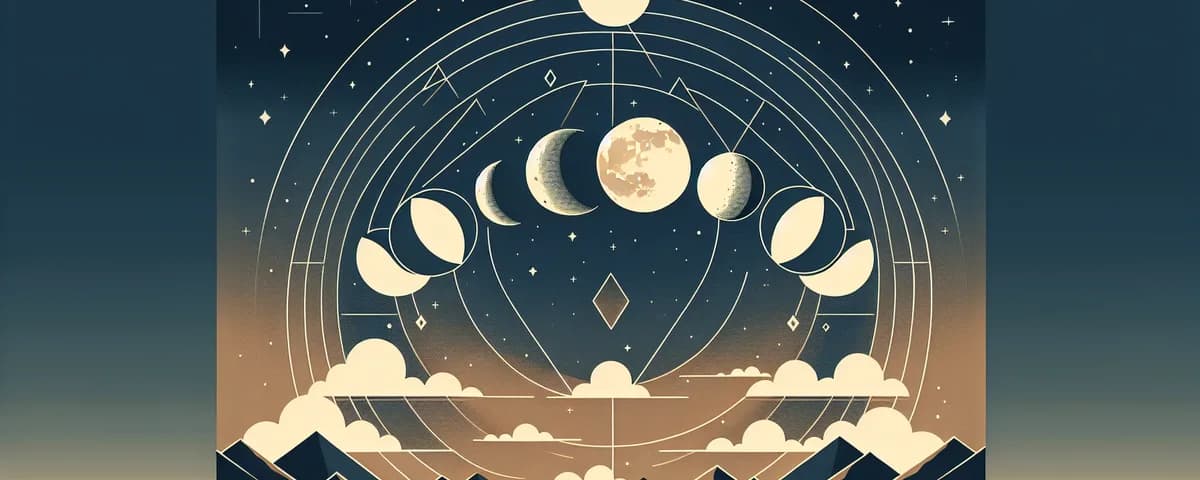
Unlike the Sun, which rises and sets at predictable times that change gradually, the Moon's schedule shifts by about 50 minutes each day. This means:
- Full Moon: Rises near sunset, sets near sunrise
- First Quarter: Rises around noon, sets around midnight
- New Moon: Rises and sets with the Sun (invisible)
- Last Quarter: Rises around midnight, sets around noon
The exact times depend on your location and the date. For your city's sunrise and sunset times, which can help you estimate moonrise, check our location-specific pages for cities like New York, Los Angeles, or Chicago.
Planning around moon phases
Outdoor events. Planning a backyard party, camping trip, or wedding? Check the moon phase calendar to see if you'll have moonlight. A full moon can provide beautiful natural lighting for evening events. A new moon means complete darkness — great for campfire ambiance but bad for navigating trails.
Travel photography. Research moon phases for your travel dates. A full moon over a famous landmark creates once-in-a-lifetime photographs. Our moon phases page covers 2025 through 2027.
Fishing trips. Many fishing calendars are built around moon phases. The gravitational effects on tides and the increased nighttime illumination both influence fish behavior. Plan major fishing trips around the full moon or new moon for the strongest tidal movements.
Gardening. If you follow biodynamic principles, plant above-ground crops during the waxing moon and root crops during the waning moon. Check the current phase on our lunar calendar.
Frequently asked questions
When is the next full moon?
Check our moon phase calendar for the exact date. Full moons occur approximately every 29.5 days.
Why is the Moon orange sometimes?
When the Moon is near the horizon, its light passes through more of Earth's atmosphere, which scatters shorter blue wavelengths and lets longer orange/red wavelengths through. This effect is most pronounced during moonrise and moonset.
What is a supermoon?
A supermoon is a full moon that occurs when the Moon is at or near its closest point to Earth (perigee). It appears about 7% larger and 15% brighter than average. There are typically 3-4 supermoons per year.
Can the full moon affect sleep?
Some studies suggest sleep quality decreases around the full Moon, with participants taking longer to fall asleep and sleeping about 20 minutes less. Whether this is due to moonlight, circalunar biological rhythms, or other factors remains debated.
How do I tell if the Moon is waxing or waning?
In the Northern Hemisphere, if the right side is illuminated, the Moon is waxing (growing). If the left side is illuminated, it's waning (shrinking). The mnemonic: the Moon "lies" — when it looks like a D (right side lit), it's growing, not Decreasing.
Try it free
Moon Phases
Builds tools that get used. Founded Timerjoy after a frustrated search for an ad-free online timer. More about the project.