Chess time controls: bullet, blitz, rapid, and classical explained
Why chess uses clocks
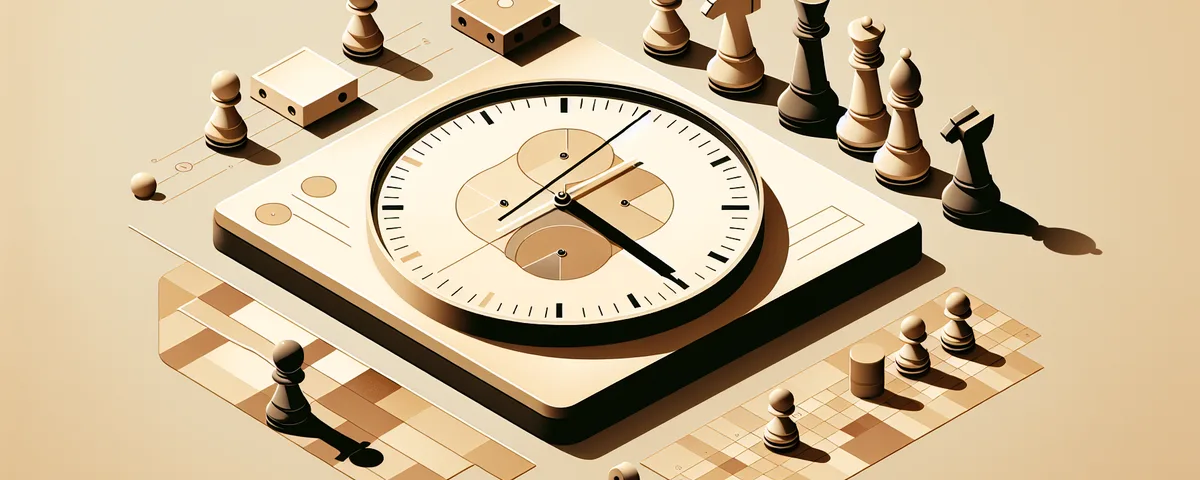
Without a clock, a chess game can last forever. Literally. In the 1800s, games routinely stretched over multiple days because one player would simply sit and think for hours. The International Chess Federation (FIDE) introduced time controls to keep games moving and add a strategic layer: time management.
Today, every competitive chess game uses a clock. Each player gets a fixed amount of time for the entire game (or per move, depending on the format). When your time runs out, you lose - regardless of your position on the board.
Time controls define the character of a chess game. A 1-minute bullet game and a 90-minute classical game require completely different skills. Understanding the formats helps you choose the right one for practice, competition, or fun.
A chess timer handles the clock for you, whether you're playing at home, in a park, or at a tournament.
Bullet chess: 1-2 minutes
Total time per player: 1-2 minutes for the entire game.
Bullet chess is speed chess at its most extreme. With only 60-120 seconds for all your moves, there's no time for deep calculation. You rely on pattern recognition, instinct, and pre-moved sequences.
1+0 (1 minute, no increment): The purest bullet format. Games last 2-4 minutes total. Mouse speed matters on digital platforms. Over-the-board, hand speed matters. Blunders are constant and expected.
2+1 (2 minutes, 1-second increment): Slightly more breathing room. The 1-second increment per move means you won't flag (run out of time) as easily in endgames.
Who plays bullet: Experienced players looking for fast practice, streamers entertaining audiences, and adrenaline junkies. Bullet is not recommended for beginners because you don't have time to think about why you're making moves.
Try a bullet chess timer to see how fast it really feels.
Blitz chess: 3-5 minutes
Total time per player: 3-5 minutes for the entire game.
Blitz is the most popular online time control. It's fast enough to be exciting but slow enough that you can actually think about your moves - at least for the first 15-20 moves.
3+0 (3 minutes, no increment): Fast blitz. You need to play the opening quickly from memory to save time for the middlegame.
3+2 (3 minutes, 2-second increment): The extra 2 seconds per move adds up. A 40-move game gives you an extra 80 seconds, effectively turning it into a 4+ minute game.
5+0 (5 minutes, no increment): The classic blitz format. This is what most people mean when they say "blitz." Enough time for some calculation, but time pressure kicks in hard after move 25.
5+3 (5 minutes, 3-second increment): A comfortable blitz pace. The increment prevents most time-scramble losses and rewards better chess over faster clicking.
Blitz develops pattern recognition and opening knowledge. It's excellent practice when paired with slower games for deep calculation work. Set up a blitz chess timer for your next game.
Rapid chess: 10-15 minutes
Total time per player: 10-15 minutes for the entire game.
Rapid chess is the sweet spot between blitz chaos and classical deliberation. You have enough time to calculate 3-4 moves ahead consistently, but not enough to spend 10 minutes on a single critical decision.
10+0 (10 minutes, no increment): Standard rapid. Games last 20-40 minutes total. You can play thoughtful chess for most of the game, with time pressure hitting in the endgame.
10+5 (10 minutes, 5-second increment): A common tournament rapid format. The increment means endgames are decided by chess skill, not clock management.
15+10 (15 minutes, 10-second increment): The upper end of rapid. FIDE considers anything between 10-60 minutes (with increment calculations) as "rapid." This format feels almost like classical chess with a time limit.
Who plays rapid: Players who want meaningful games without the 3-4 hour commitment of classical. Rapid tournaments have become increasingly popular since the COVID era, when online rapid events exploded.
Rapid is the best format for improvement. You have time to think about your moves but not so much time that you overthink or lose focus.
Classical chess: 30-60+ minutes
Total time per player: 30 minutes to 2+ hours, often with increments.
Classical chess is the original format and still considered the highest form of competitive chess. World Championship matches use classical time controls.
30+0 (30 minutes per side): The minimum for "classical feel" games. Common in casual over-the-board play.
60+30 (60 minutes, 30-second increment): A common club tournament format. Games last 2-3 hours.
90+30 (90 minutes, 30-second increment): Standard FIDE classical format for most serious tournaments. You can spend 15-20 minutes on a critical move without falling behind on time.
Key difference from faster formats: In classical chess, the clock is rarely the deciding factor. Games are won and lost on the strength of your calculation, strategy, and endgame technique. Time management still matters, but it's not the frantic scramble you see in blitz.
Classical chess builds the deepest understanding. Every serious player should play classical games regularly, even if they prefer blitz online.
What is Fischer increment
Fischer increment (named after Bobby Fischer, who invented the concept) adds a fixed number of seconds to your clock after every move.
How it works: In a 5+3 game, you start with 5 minutes. After you make your first move, 3 seconds are added to your clock. After your second move, another 3 seconds. This continues for the entire game.
Why it exists: Without increment, endgames become absurd. A player with a winning position but 2 seconds on the clock has to make 20 moves in 2 seconds. That's not chess - that's a clicking contest. Increment ensures that you always have at least a few seconds to make each move.
Bronstein delay is an alternative system where the clock doesn't start ticking until the increment period has passed. In a 5+3 Bronstein delay game, you get 3 seconds of "free time" per move - but unused delay time doesn't accumulate. Fischer increment is more common in digital chess; Bronstein delay appears in some over-the-board tournaments.
Most serious online and over-the-board games now use Fischer increment. It produces better chess.
Choosing the right time control
For beginners: Start with 10+5 or 15+10 rapid. You need time to think about each move and understand why positions are good or bad. Playing only bullet and blitz builds bad habits early.
For intermediate players (1200-1800): Mix rapid and blitz. Play 2-3 rapid games for learning and 5-10 blitz games for pattern practice per session.
For advanced players (1800+): Add classical games to your routine. The depth of calculation required in classical chess exposes weaknesses that blitz hides.
For fun with friends: 5+0 or 3+2 blitz is the most universally enjoyable format. Fast enough to keep everyone engaged, slow enough that the better player usually wins.
For a broader look at how different types of timers work, see our guide on types of timers explained.
Online vs over-the-board time controls
Online and over-the-board (OTB) chess handle time differently in practice.
Online advantages: The clock is automatic. It switches the instant you make a move. Pre-moves (queuing your next move before your opponent plays) are possible. Server lag compensation adds small amounts of time.
OTB differences: You must physically press the clock after each move. This adds 0.5-1 second per move of overhead. Pressing the clock is part of the skill - fumbling costs time. No pre-moves exist.
Rating differences: Most players are rated 100-200 points higher in online blitz than OTB blitz, partly because mouse clicks are faster than physical piece movement and clock pressing.
Tournament standards: FIDE-rated OTB tournaments use specific time controls for each rating category. Online platforms (Chess.com, Lichess) let you play any time control anytime.
Set your chess timer to match whatever format you're practicing. Consistent practice with the same time control builds the internal clock sense that strong players rely on.
Try it free
Chess Timer
Builds tools that get used. Founded Timerjoy after a frustrated search for an ad-free online timer. More about the project.