Cooking timer tips: never burn food again
The problem with "cook until done"
Most recipes give vague instructions: "cook until golden brown," "bake until done," "simmer until tender." These work if you've cooked the dish a hundred times. For everyone else, they lead to burnt food, undercooked meals, and frustration.
A timer solves this. Instead of guessing, you set a specific timer and focus on other things. Here's a practical reference for the most common cooking tasks.
Eggs: the definitive timing guide
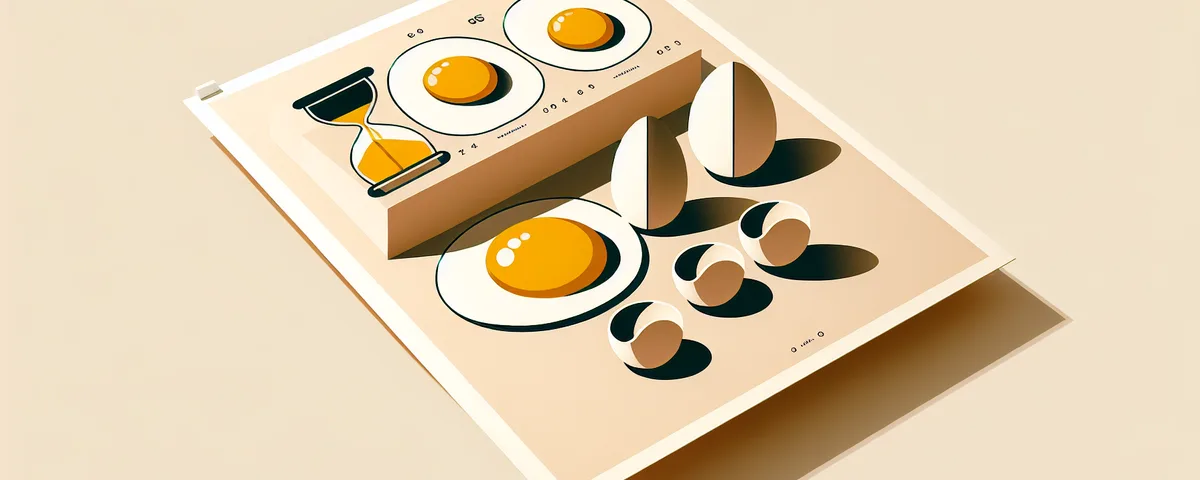
Boiling eggs is the ultimate timer task. Every minute matters.
Soft-boiled (runny yolk): 6–7 minutes from boiling water
Medium-boiled (jammy yolk): 8–9 minutes from boiling water
Hard-boiled (fully set): 11–12 minutes from boiling water
The trick: start with boiling water, lower eggs gently with a spoon, start your timer immediately. When the timer rings, transfer eggs to ice water to stop cooking.
Scrambled eggs: 3–4 minutes on medium-low heat, stirring constantly. Remove from heat while they still look slightly underdone - they'll continue cooking on the plate.
Fried eggs (sunny side up): 3–4 minutes on medium heat with a lid. The lid steams the top without flipping.
Pasta: why one minute matters
Most pasta packages give a range (8–10 minutes, for example). For al dente, always use the shorter time and test one piece.
Thin pasta (angel hair, spaghetti): 7–8 minutes
Medium pasta (penne, fusilli): 10–11 minutes
Thick pasta (rigatoni, paccheri): 12–14 minutes
Fresh pasta: 2–3 minutes (it cooks fast)
Set your timer for 1 minute less than the package says. Test, then add more time if needed. You can always cook pasta more - you can't un-cook it.
Rice: the set-and-forget method
Rice is one of the easiest things to cook with a timer and one of the easiest to mess up without one.
White rice: Bring to boil, reduce to low, cover. 18 minutes. Don't open the lid.
Brown rice: Same method. 45 minutes.
Basmati rice: 15 minutes on low after boiling.
After the timer: remove from heat, keep the lid on for 5 more minutes. This steaming step makes rice fluffy instead of sticky.
Meat: internal temp + timing
Timing varies by thickness, but these are reliable starting points:
Chicken breast (boneless, 1 inch thick): 6–7 minutes per side on medium-high heat. Internal temp: 165°F / 74°C.
Steak (1 inch thick, medium-rare): 4 minutes per side on high heat. Internal temp: 130°F / 54°C. Rest for 5 minutes before cutting.
Salmon fillet: 4–5 minutes per side on medium heat, or 12–15 minutes in a 400°F / 200°C oven.
Ground beef: 8–10 minutes total, breaking apart as it cooks. No pink remaining.
Always let meat rest after cooking. 5 minutes for small cuts, 10–15 minutes for roasts. This allows juices to redistribute - cutting immediately lets them run out.
Vegetables: quick reference
Steamed broccoli: 5–6 minutes (should be bright green and slightly firm)
Roasted potatoes (cubed): 25–30 minutes at 425°F / 220°C
Sautéed onions: 8–10 minutes for soft and translucent, 20–25 minutes for caramelized
Roasted carrots: 20–25 minutes at 400°F / 200°C
Steamed green beans: 4–5 minutes
Roasted Brussels sprouts: 20–25 minutes at 425°F / 220°C
The golden rule for roasted vegetables: cut them the same size so they cook evenly. Don't overcrowd the pan - overcrowding creates steam instead of browning.
Baking: where precision matters most
Baking is chemistry. A few minutes too long means dry, tough, or burnt results.
Cookies: 9–12 minutes at 350°F / 175°C. Remove when edges are set but centers look slightly underdone. They'll firm up as they cool.
Muffins: 18–22 minutes at 375°F / 190°C. Test with a toothpick - it should come out clean.
Banana bread: 55–65 minutes at 350°F / 175°C. Cover with foil after 30 minutes if the top is browning too fast.
Pizza (homemade, thin crust): 8–12 minutes at the highest your oven goes (usually 500°F / 260°C).
Toast: the forgotten timer task
Toast goes from perfect to burnt in about 15 seconds. If you're toasting in a pan (no toaster):
Light toast: 2 minutes per side on medium heat
Dark toast: 3 minutes per side on medium heat
Garlic bread under a broiler: 2–3 minutes. Watch it like a hawk - broilers are aggressive.
The kitchen timer strategy
Use your timer proactively, not reactively. As soon as you put something on the stove or in the oven, set a timer. Don't tell yourself "I'll remember" - you won't. You'll get distracted by another part of the meal, and by the time you smell burning, it's too late.
For multi-component meals, set multiple timers with labels: "rice - 18 min," "chicken - 14 min," "veggies - 10 min." Start with the longest-cooking item and add others at the right moment so everything finishes together.
Try it free
Cooking Timer
Builds tools that get used. Founded Timerjoy after a frustrated search for an ad-free online timer. More about the project.